Table Of Content
We are interested in how a mouse responds to five different materials inserted into subcutaneous tissue to evaluate the materials’ use in medicine. Here we will block on the individual mice because even lab mice have individual variation. We actually are not interested in estimating the effect of the mice because they aren’t really of interest, but the mouse block effect should be accounted for before we make any inferences about the materials. Notice that if we only have one insertion per mouse, then the mouse effect will be confounded with materials.
Mean Squares
We also consider extensions when more than a single blocking factor exists which takes us to Latin Squares and their generalizations. When we can utilize these ideal designs, which have nice simple structure, the analysis is still very simple, and the designs are quite efficient in terms of power and reducing the error variation. The single design we looked at so far is the completely randomized design (CRD) where we only have a single factor. In the CRD setting we simply randomly assign the treatments to the available experimental units in our experiment. Formal test of interaction effects between blocks and treatments for a randomized block design.
A new approach for approximating the p-value of a class of bivariate sign tests Scientific Reports - Nature.com
A new approach for approximating the p-value of a class of bivariate sign tests Scientific Reports.
Posted: Sun, 05 Nov 2023 07:00:00 GMT [source]
Data Analytics
Thus, in any experiment that uses blocking it’s also important to randomly assign individuals to treatments to control for the effects of any potential lurking variables. Many such cases are discussed in.[7] However, it can also be observed trivially for the magic squares or magic rectangles which can be viewed as the partially balanced incomplete block designs. We consider an example which is adapted from Venables and Ripley (2002), the original source isYates (1935) (we will see the full data set in Section 7.3). Atsix different locations (factor block), three plots of land were available.Three varieties of oat (factor variety with levels Golden.rain, Marvellousand Victory) were randomized to them, individually per location. In our previous diet pills example, a blocking factor could be the sex of a patient.
Designer gender ratio by year
It is impossible to use a complete design (all treatments in each block) in this example because there are 3 sunscreens to test, but only 2 hands on each person. Obtained from counting for a fixed x the triples (x, y, B) where x and y are distinct points and B is a block that contains them both. This equation for every x also proves that r is constant (independent of x) even without assuming it explicitly, thus proving that the condition that any x in X is contained in r blocks is redundant and r can be computed from the other parameters.
Open multimodal iEEG-fMRI dataset from naturalistic stimulation with a short audiovisual film Scientific Data - Nature.com
Open multimodal iEEG-fMRI dataset from naturalistic stimulation with a short audiovisual film Scientific Data.
Posted: Mon, 21 Mar 2022 07:00:00 GMT [source]
General balanced designs (t-designs)
For example, in testing a drug to prevent heart disease, we know that gender, age, and exercise levels play a large role. We should partition our study participants into gender, age, and exercise groups and then randomly assign the treatment (placebo vs drug) within the group. This will ensure that we do not have a gender, age, and exercise group that has all placebo observations.
What is blocking in experimental design?
Identify potential factors that are not the primary focus of the study but could introduce variability. By using these rising trends as well as knowledge of what to be on the lookout for in the industry itself, you can make the most of the statistics to help your business realize more long-term success. We compared designers with similar job titles to see how gender ratios vary. As you can see, exhibit builder and senior industrial designer have the biggest gender ratio gaps. Why is it important to make sure that the number of soccer players running on turf fields and grass fields is similar across different treatment groups? The statistical model corresponding to the RCBD is similar to the two-factor studies with one observation per cell (i.e. we assume the two factors do not interact).
Lesson 4: Blocking
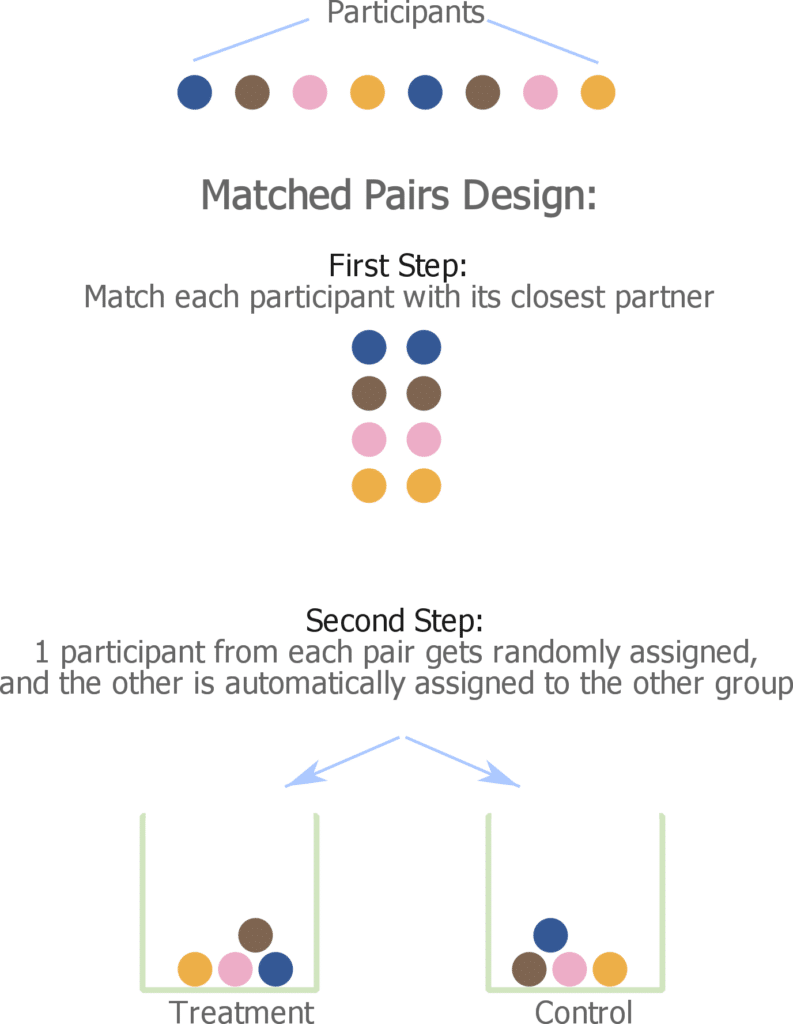
The cells in the matrix have indices that match the X1, X2 combinations above. The final step in the blocking process is allocating your observations into different treatment groups. All you have to do is go through your blocks one by one and randomly assign observations from each block to treatment groups in a way such that each treatment group gets a similar number of observations from each block.
Statology Study
These blocks are just different patches of land, and each block is partitioned into four plots. Then we randomly assign which variety goes into which plot in each block. You will note that variety A appears once in each block, as does each of the other varieties. Using the example from the last section, we are conducting an experiment on the effect of cell phone use (yes vs. no) on driving ability. The independent variable is cell phone use and the dependent variable is driving ability. A potential control variable would be driving experience as it most likely has an effect on driving ability.
Average designer age
So we think of the data in the greenhouse example in terms of RCBD, we will have 6 blocks each with block size equal to 4, the number of fertilizer levels. A randomized block design is an experimental design where the experimental units are in groups called blocks. The treatments are randomly allocated to the experimental units inside each block. When all treatments appear at least once in each block, we have a completely randomized block design. Second, the blocking variable cannot interact with the independent variable.
Forrester has recently published a new look at the design industry and the trends driving it. Forrester estimates the size of the global design industry to be $162 billion and believe multiple software categories used in design will grow more than 20% this year. Planning on taking an introductory statistics course, but not sure if you need to start at the beginning? Review the course description for each of our introductory statistics courses and estimate which best matches your level, then take the self test for that course. If you get all or almost all the questions correct, move on and take the next test.
The first step of implementing blocking is deciding what variables you need to balance across your treatment groups. Here are some examples of what your blocking factor might look like. First the individual observational units are split into blocks of observational units that have similar values for the key variables that you want to balance over. After that, the observational units from each block are evenly allocated into treatment groups in a way such that each treatment group is allocated similar numbers of observational units from each block. The key element is that each treatment level or treatment combination appears in each block (forming complete blocks), and is assigned at random within each block.
Every binary matrix with constant row and column sums is the incidence matrix of a regular uniform block design. Also, each configuration has a corresponding biregular bipartite graph known as its incidence or Levi graph. To estimate the efficiency that was gained by blocking (relative to completely randomized design). To improve the precision of treatment comparisons, we can reduce variability among the experimental units.


No comments:
Post a Comment